
Abrasion at routing points
Clips, brackets, pass-throughs and chassis edges wear through tape and thin wall sleeving. Choose an abrasion-rated outer layer and confirm the test method with your harness drawing.
Application · Wire Harness
Harness failures rarely come from the conductor. They come from the route: chafing at a clip, heat near a manifold, water at a connector, or a bundle that was over-compressed at assembly. WCW builds material combinations around those four failure modes and supports them with samples, datasheets and test documents.
Application challenges
Clips, brackets, pass-throughs and chassis edges wear through tape and thin wall sleeving. Choose an abrasion-rated outer layer and confirm the test method with your harness drawing.
Continuous ambient plus radiant heat dries out PVC and accelerates aging. Select construction and temperature class from the measured peak, not the average.
Moisture ingress at connector transitions is a common warranty claim. Dual-wall adhesive-lined tubing provides a melt-sealed barrier when shrink ratio and clearance allow.
Expandable sleeving must cover the largest bundle while staying snug on branches; confirm expansion ratio, bend radius and cut length before tooling.
Recommended materials
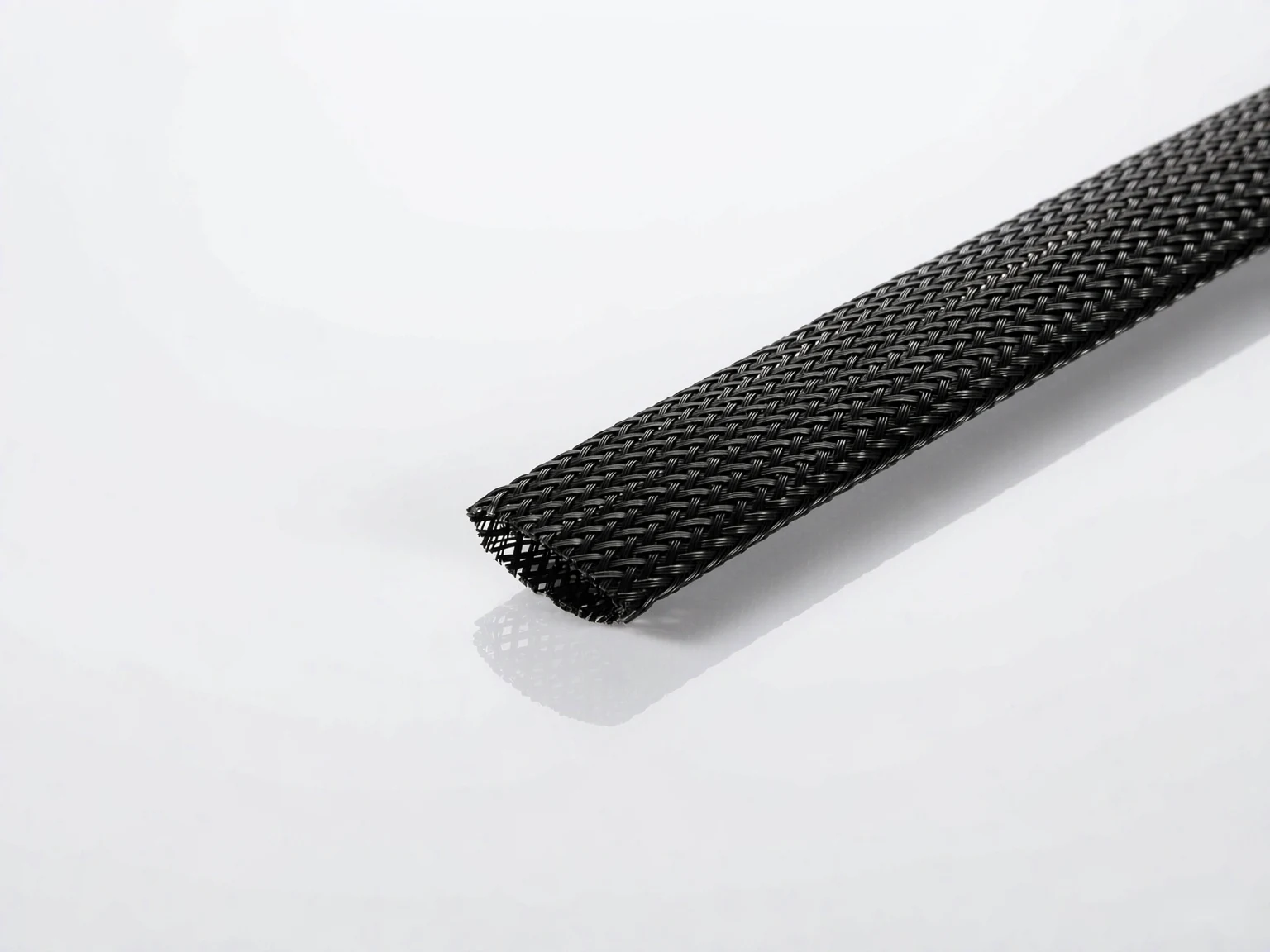
Expandable, abrasion-resistant outer protection for harness bundles with branches.
View detailsWrap-around installation for retrofits and harnesses that cannot be de-pinned.
View detailsFlexible routing protection with high crush resistance in tight spaces.
View detailsAdhesive-lined sealing and strain relief at connectors, splices and terminals.
View detailsHigh-temperature dielectric protection at hot routing points and lead exits.
View detailsSelection checklist
Bundle diameter: Min / max OD, branch points and required expansion ratio
Temperature: Continuous ambient, peak excursion and radiant heat sources
Abrasion class: Test method, cycle count and acceptance criteria
Sealing: IP requirement at connectors, splices and grommets
Bend radius: Minimum route radius and flex / static condition
Documents: UL file, RoHS / REACH, PPAP or sample validation plan
Catalogue values describe the product direction we can supply. Confirm final drawing, grade, tolerance and test method before mass production.
FAQ
Corrugated tube gives higher crush resistance and holds a route shape; braided sleeving gives better flexibility, coverage and abrasion resistance on branching bundles. Many harnesses use both: corrugated in high-crush zones, braided in the main run.
Yes. Cut length, slit width, colour and packaging can be specified per harness drawing, and pre-cut kits can be packed by station.
UL file numbers for listed constructions, RoHS / REACH declarations, dimensional reports and sample validation data. Third-party testing can be arranged when the target market requires it.
Yes. Send the drawing and operating conditions and we will confirm a sample plan, normally shipped within 3-5 working days.
Quote and samples
Bundle diameter, route temperature, abrasion requirement, connector sealing class and annual volume are enough for us to come back with a material proposal.