
Dielectric strength at temperature
Breakdown voltage falls as temperature rises. Specify the class at the working temperature, not the catalogue value at 23 °C.
Application · Transformer
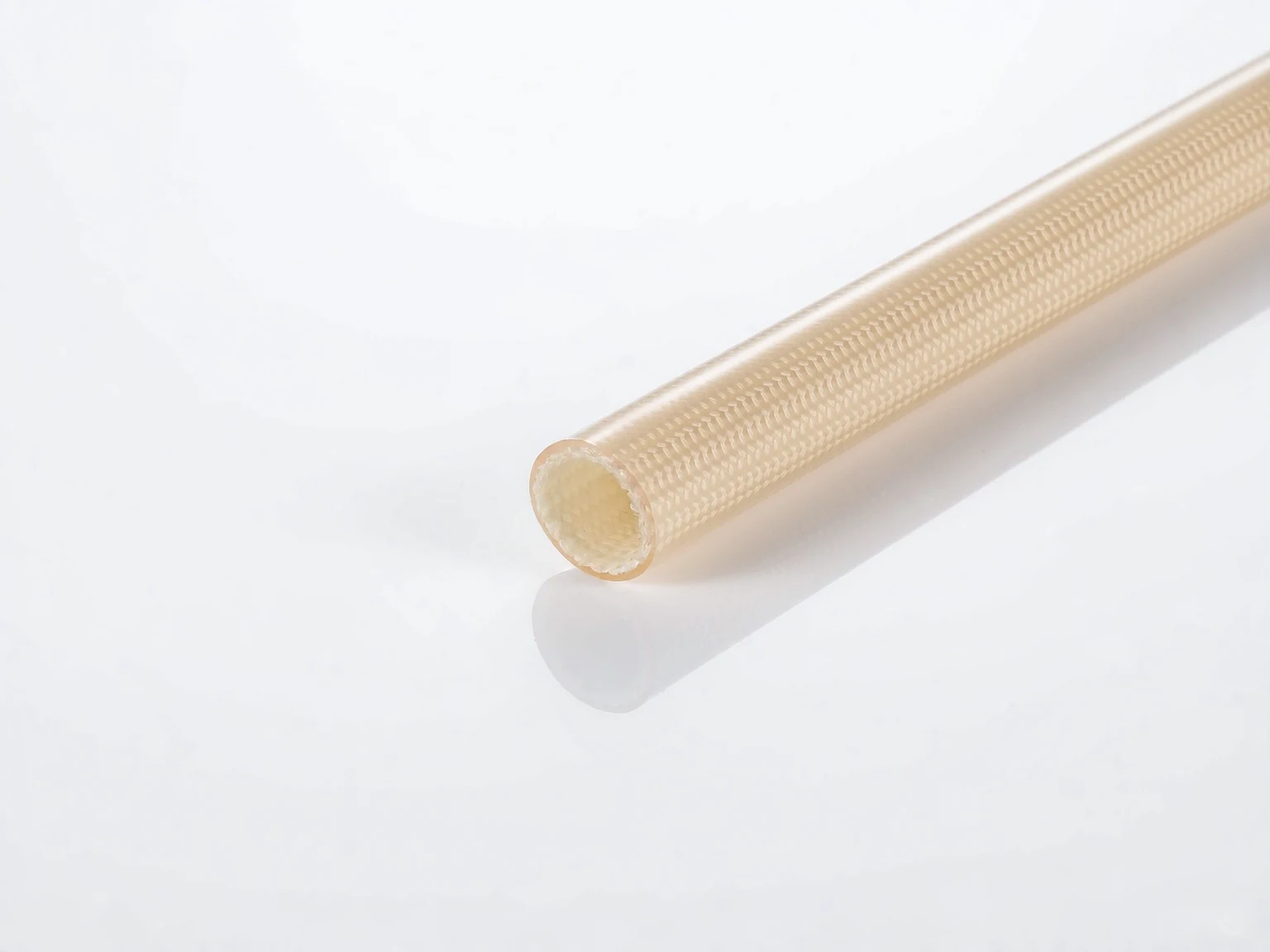
Transformer lead insulation is a thermal and dielectric problem at the same time. The sleeve must hold breakdown voltage at the operating temperature, survive potting or oil immersion, and stay flexible enough to route around the bobbin without cracking.
Application challenges
Breakdown voltage falls as temperature rises. Specify the class at the working temperature, not the catalogue value at 23 °C.
Class 155 and Class 200 constructions behave differently under cyclic peaks. Match the class to the measured winding hot spot.
Resin and oil attack some coatings. Confirm compatibility with the actual medium, cure cycle and cleaning solvents.
Replacing a specified brand requires dimensional, dielectric and thermal evidence. Plan sample validation before the change is released.
Recommended materials
Class 200 dielectric sleeve for lead exits and winding ends.
View detailsClass 155 general-purpose insulation with good flexibility.
View details7.0 kV and 4.0 kV grades for high-voltage windings.
View detailsChemical and oil resistant protection at high temperature.
View detailsFor oil-immersed and potted assemblies.
View detailsSelection checklist
Working voltage: System voltage, test voltage and required breakdown margin
Temperature class: Class 155 / 200, hot spot and peak excursion
Medium: Air, oil, potting resin, cleaning solvents
Dimensions: Lead diameter, sleeve ID, wall thickness, cut length
Flammability: VW-1 or equivalent requirement
Approval: UL file, RoHS / REACH and replacement validation plan
Catalogue values describe the product direction we can supply. Confirm final drawing, grade, tolerance and test method before mass production.
FAQ
Start from the measured hot spot at rated load plus margin, then check the peak excursion. If the hot spot is close to 155 °C, Class 200 usually gives the safer long-term margin.
Oil-resistant constructions are available, but compatibility depends on the oil type, temperature and any additive package. Confirm with an immersion sample test.
Yes. Send the drawing or the specified part and we will propose an equivalent with dimensional and dielectric data for your validation.
Standard constructions are usually shipped within 3-5 working days; custom cut lengths and special grades depend on the quantity.
Quote and samples
Working voltage, temperature class, medium, lead diameter and annual volume are enough for a material proposal and sample plan.