
Heat aging at the winding end
Continuous temperature plus varnish cure drives embrittlement. Confirm class against the measured winding temperature, not the nameplate.
Application · Motor
Motor leads are pushed, bent and varnished during assembly, then run hot for years. The sleeve has to survive the build process first and the thermal life afterwards - both matter when you pick a construction.
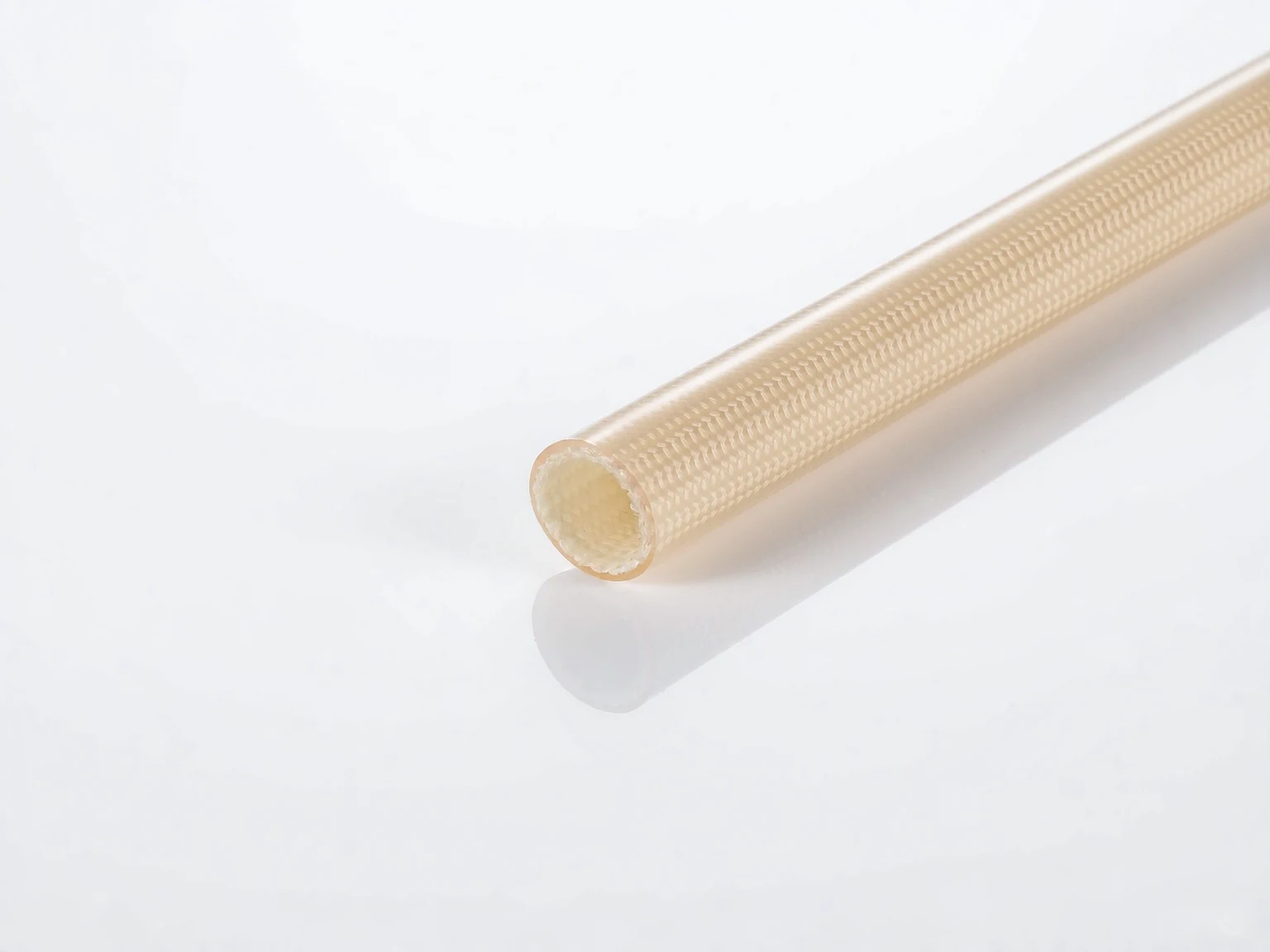
Application challenges
Continuous temperature plus varnish cure drives embrittlement. Confirm class against the measured winding temperature, not the nameplate.
Oil-cooled and compressor motors expose the sleeve to aggressive media. Material choice and coating matter more than wall thickness.
Leads are pulled through slots and bent at tight radii. A construction that cracks during assembly becomes a field failure later.
Impregnation changes the insulation system. Confirm the breakdown margin after the actual varnish process.
Recommended materials
Class 200 lead protection with high dielectric strength.
View detailsClass 155 flexible insulation for general motor leads.
View detailsFor high-voltage and inverter-driven motors.
View detailsStrain relief and sealing at the lead-to-terminal transition.
View detailsChemical and refrigerant resistant routing in harsh media.
View detailsSelection checklist
Lead diameter: Conductor and insulation OD, bend radius at the exit
Temperature: Class, hot spot and varnish cure cycle
Medium: Oil, refrigerant, cleaning solvent
Voltage: Working voltage, inverter waveform, test voltage
Assembly: Pull force, bend radius and insertion method
Documents: UL file, RoHS / REACH, varnish compatibility note
Catalogue values describe the product direction we can supply. Confirm final drawing, grade, tolerance and test method before mass production.
FAQ
Standard silicone and acrylic constructions are used in varnished assemblies, but the cure temperature and solvent must be checked against the specific grade. Send the varnish data sheet and we will confirm.
Yes. Oil-resistant constructions are available; validation should include immersion at the working temperature.
We supply the sleeving cut to length; assembly into the lead is normally done at your line. Pre-cut kits can be packed by station.
Higher dv/dt increases dielectric stress. Specify the test voltage and waveform so the wall thickness and grade can be selected with margin.
Quote and samples
Lead diameter, temperature class, medium, voltage waveform and varnish cure cycle let us propose a construction that survives both build and life.