
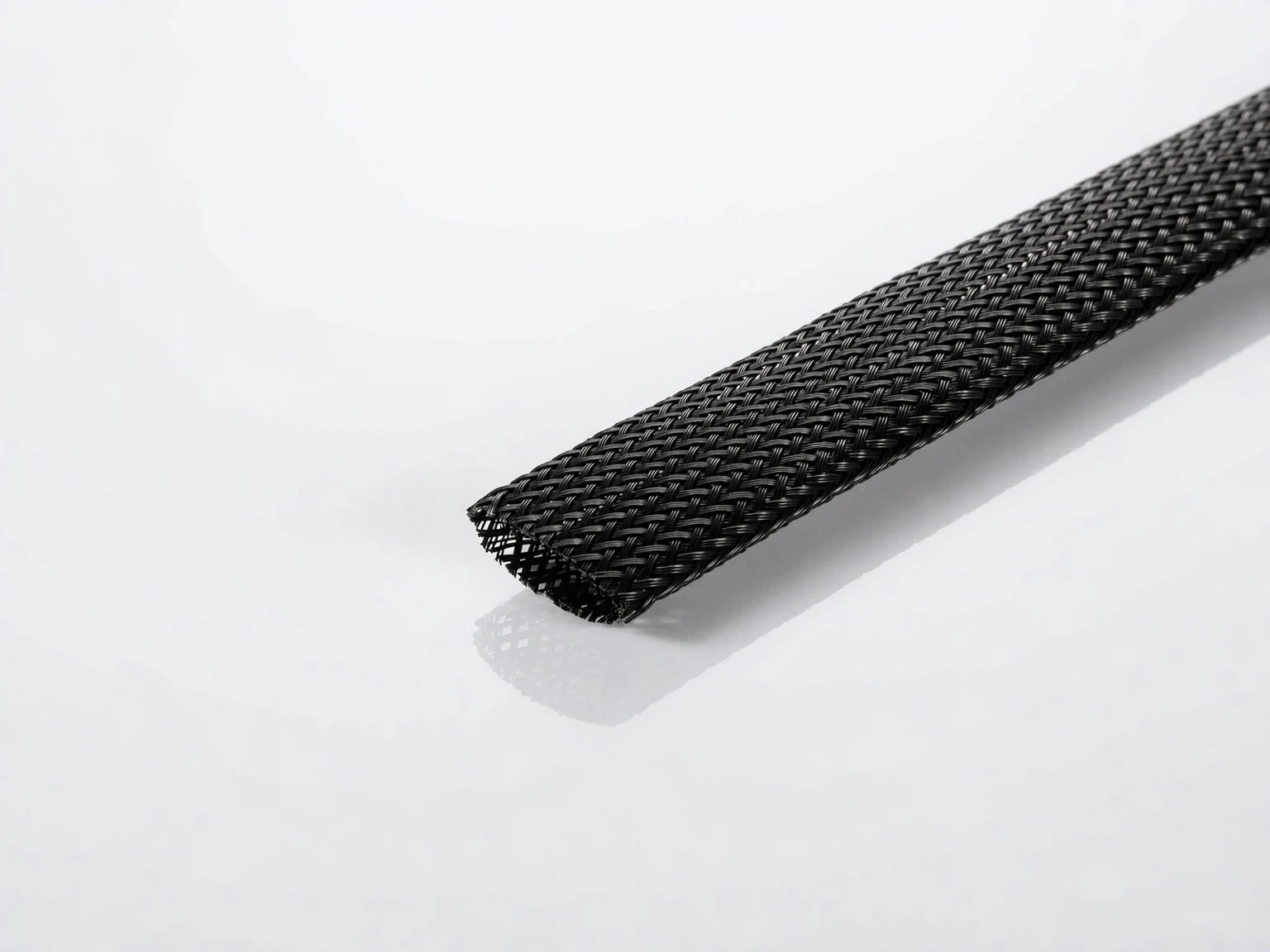
PET braided sleeving
Expandable polyester monofilament braid for bundling and outer abrasion protection. Light, flexible, good heat dissipation — the default choice for engine-bay-external harnesses and internal equipment routing.
BRAIDED PROTECTION RANGE
Expandable PET braided sleeving, self-wrapping sleeving, corrugated tube, aluminium-foil fire sleeve and spiral wrap for automotive harnesses, energy storage, robotics, control cabinets and rail equipment. Selection support based on bundle diameter, continuous temperature, abrasion exposure and installation method, with samples, datasheets and compliance documents.
Product structures
Expandable polyester monofilament braid for bundling and outer abrasion protection. Light, flexible, good heat dissipation — the default choice for engine-bay-external harnesses and internal equipment routing.
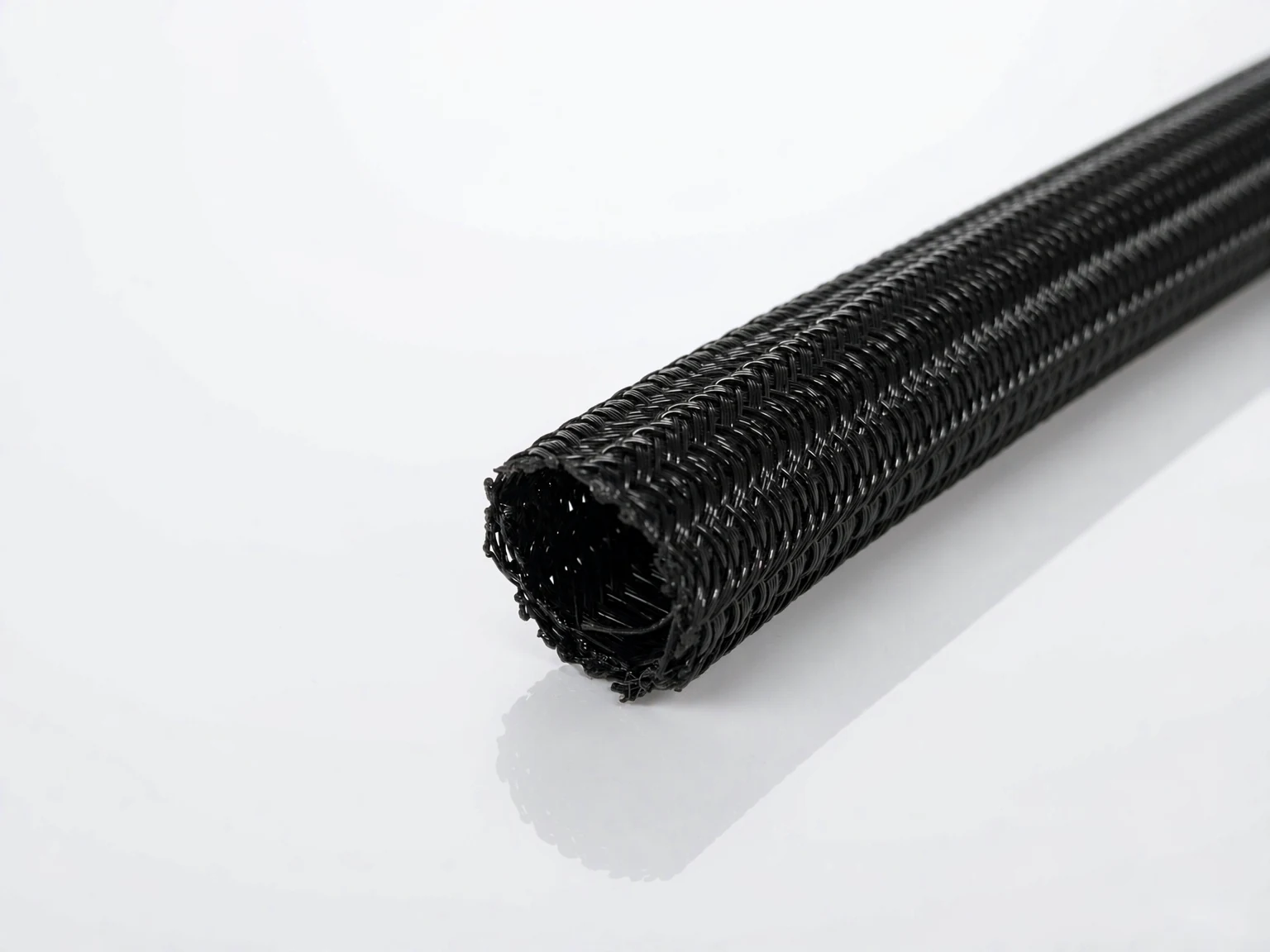
Longitudinal self-closing construction that can be added without disconnecting wires. Used for branch harnesses, retrofit work and locations requiring repeated access. Flat width 10–200 mm, −50 to 155 °C continuous.
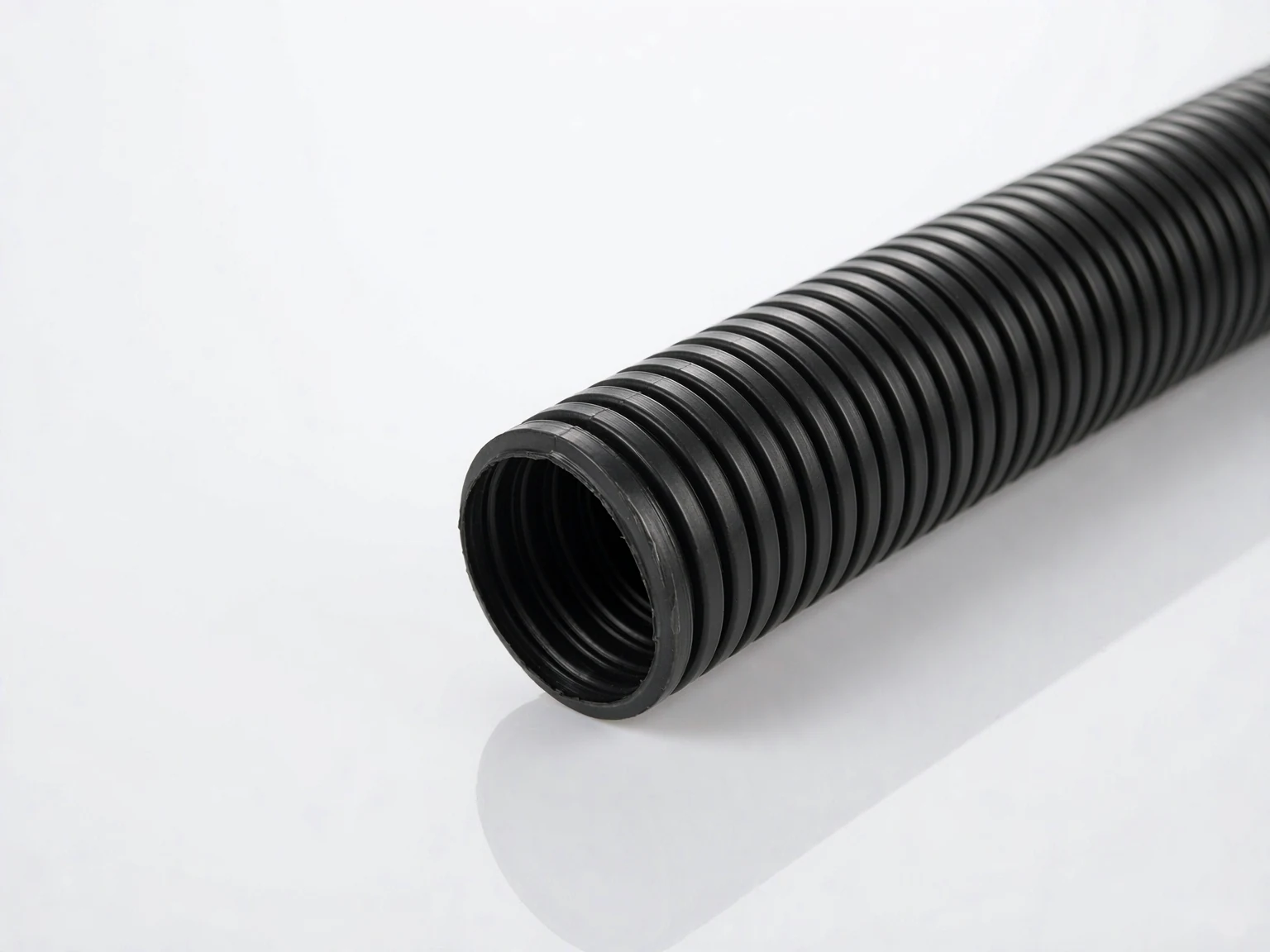
PP or PA corrugated extrusion with strong crush and abrasion resistance, for chassis, robot arms and construction machinery exposed to mechanical impact. PP 125 °C / PA 150 °C continuous.
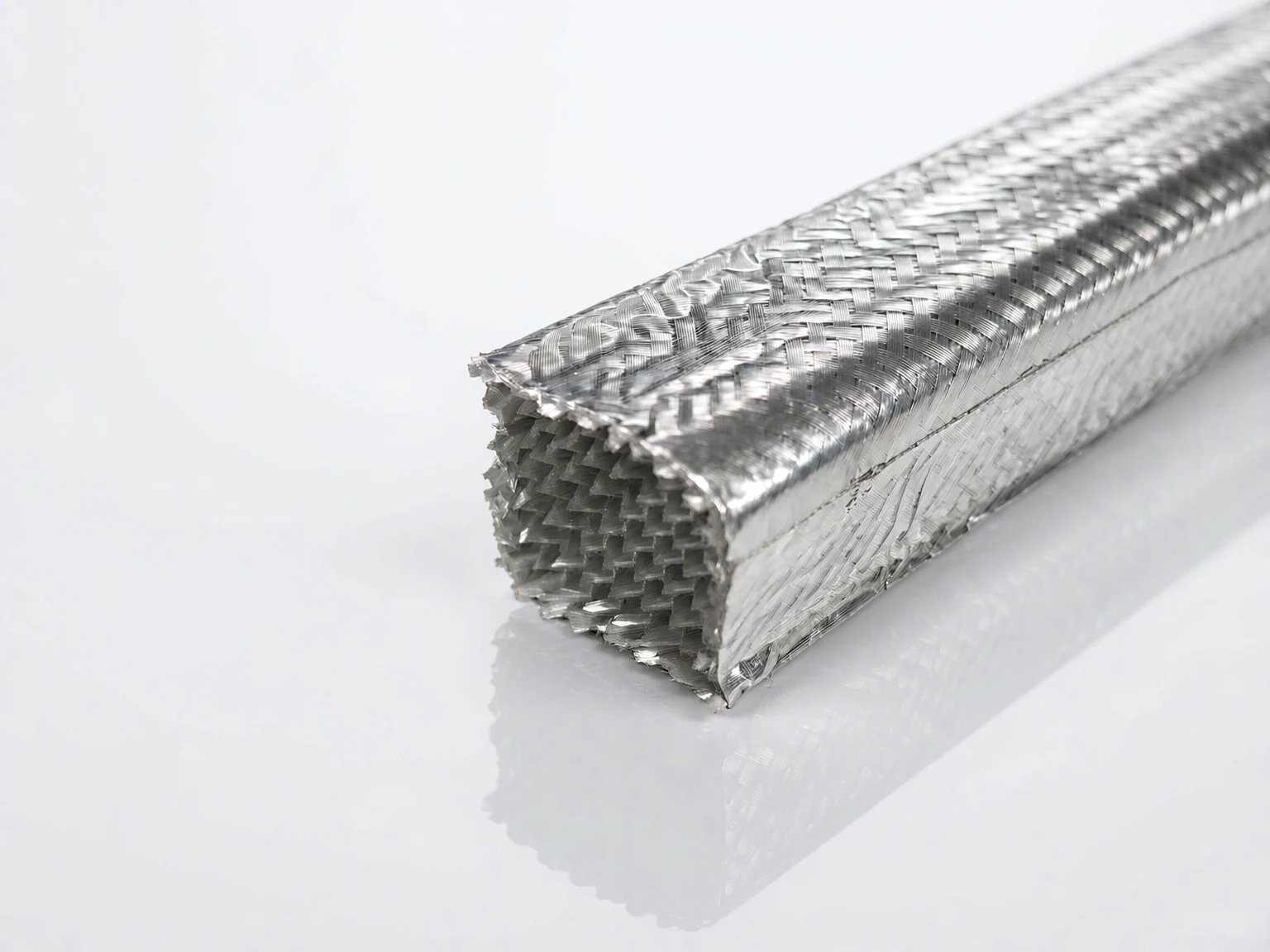
Aluminium foil reflective layer bonded to a fibreglass substrate, for harnesses routed near heat sources, combining radiant heat shielding with flexible routing.
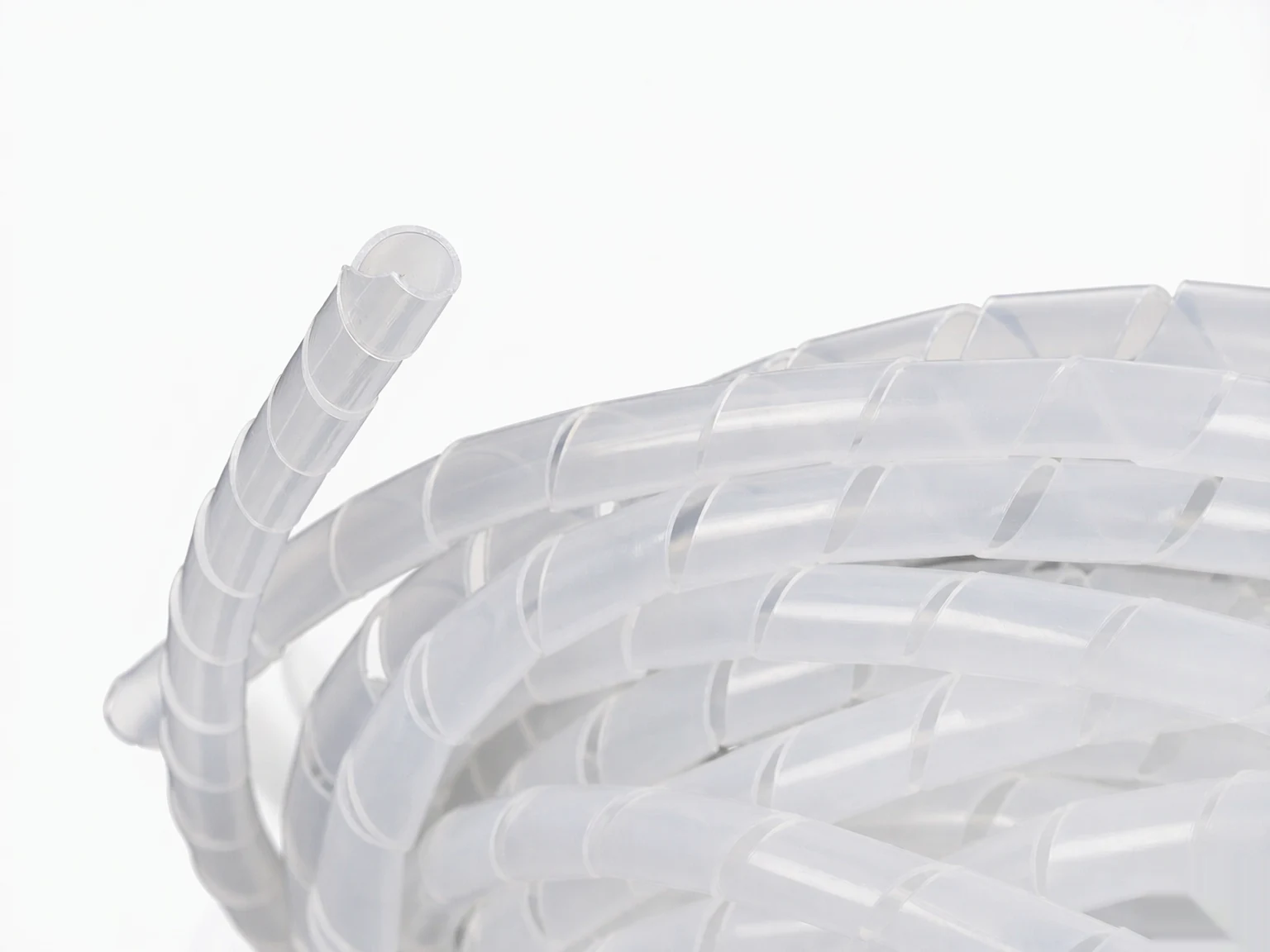
PA, PTFE or silicone spiral structure for bundling branch points and local reinforcement, usually combined with braided sleeving.
Selection
Bundle diameter range (minimum and maximum, not a single nominal value); continuous and peak temperature with duration; abrasion or crush exposure; flame-retardant requirement; installation method (push-through, self-wrapping or slit); colour and circuit identification; cut length, packaging and annual volume.
Specification comparison
Temperature values are reference ranges per material; the specific part number is defined by its datasheet.
| Series | Material | Continuous temp. (reference) | Structure | Protection focus | Typical use |
|---|---|---|---|---|---|
| PET braided sleeving | Polyester (PET) monofilament | −50 to 155 °C | Expandable braid, 1.5–2.5× typical expansion | Abrasion, bundling, low weight | Automotive harnesses, inverters, robotics, cabinets |
| PET self-wrapping | Polyester (PET) | −50 to 155 °C | Longitudinal self-closing; flat width 10–200 mm | Retrofit without disconnection | Branch harnesses, retrofit, control cabinets |
| Corrugated tube | PP (high-temp modified) / PA | PP −40 to 125 °C; PA −40 to 150 °C | Corrugated extrusion, slit or closed | Crush and abrasion resistance | Chassis, construction machinery, robot arms |
| Aluminium-foil fire sleeve | Aluminium foil + fibreglass | Structure-dependent | Reflective layer with flexible routing | Radiant heat shielding | Engine bay, exhaust-adjacent routing |
| Spiral wrap | PA / PTFE / silicone | PA approx. −40 to 120 °C; PTFE to 260 °C | Spiral winding | Branch bundling, local reinforcement | Branch points, service sections, exits |
The PP grade is a high-temperature modified compound (general-purpose PP is typically rated 100–105 °C only). Both PP and PA are held as standard stock specifications.
Self-adhesive fire sleeve is rated 260 °C or 300 °C continuous depending on construction grade; the 1000 °C figure is a seconds-level flame-impingement reference and must not be used as a continuous rating.
Selection pitfalls
Sizing by bundle OD alone. A braided sleeve is normally specified as a coverage range, not a single diameter. Giving one number usually produces a sleeve that will not open at the largest bundle and sits loose at the smallest.
Ignoring the minimum bundle diameter. A sleeve that is too loose at the minimum diameter migrates under vibration and concentrates abrasion. Specify both ends of the range.
Installation pitfalls
PET braid must be hot-cut; a plain cut continues to fray and the sleeve works loose over time.
Fibreglass is hard and the cut ends are sharp — repeated threading damages wire insulation. Use a lined construction or switch to PET where repeated assembly is required.
FAQ
Provide minimum and maximum bundle diameter, continuous temperature, abrasion exposure and installation method. A single "12 mm harness" is rarely enough, because actual diameter varies between trunk and branch.
The multiple by which the sleeve opens from its relaxed state to its maximum usable state. A higher ratio covers more bundle sizes with one part number, but coverage — and therefore protection — decreases as it stretches.
Closed (push-through) for new builds and volume production; self-wrapping for retrofit and branch additions where disconnecting wires is not an option. Both frequently coexist in one project.
Yes, per structure: flame rating, RoHS and REACH. Flame performance depends on yarn, braid density and construction, so it is not transferable across sizes within a series.
RFQ
Send these points together for a specific proposal rather than a range:
Related products
Samples and selection
Include industry, bundle range, continuous temperature, flame rating, expected volume and the documents you need.