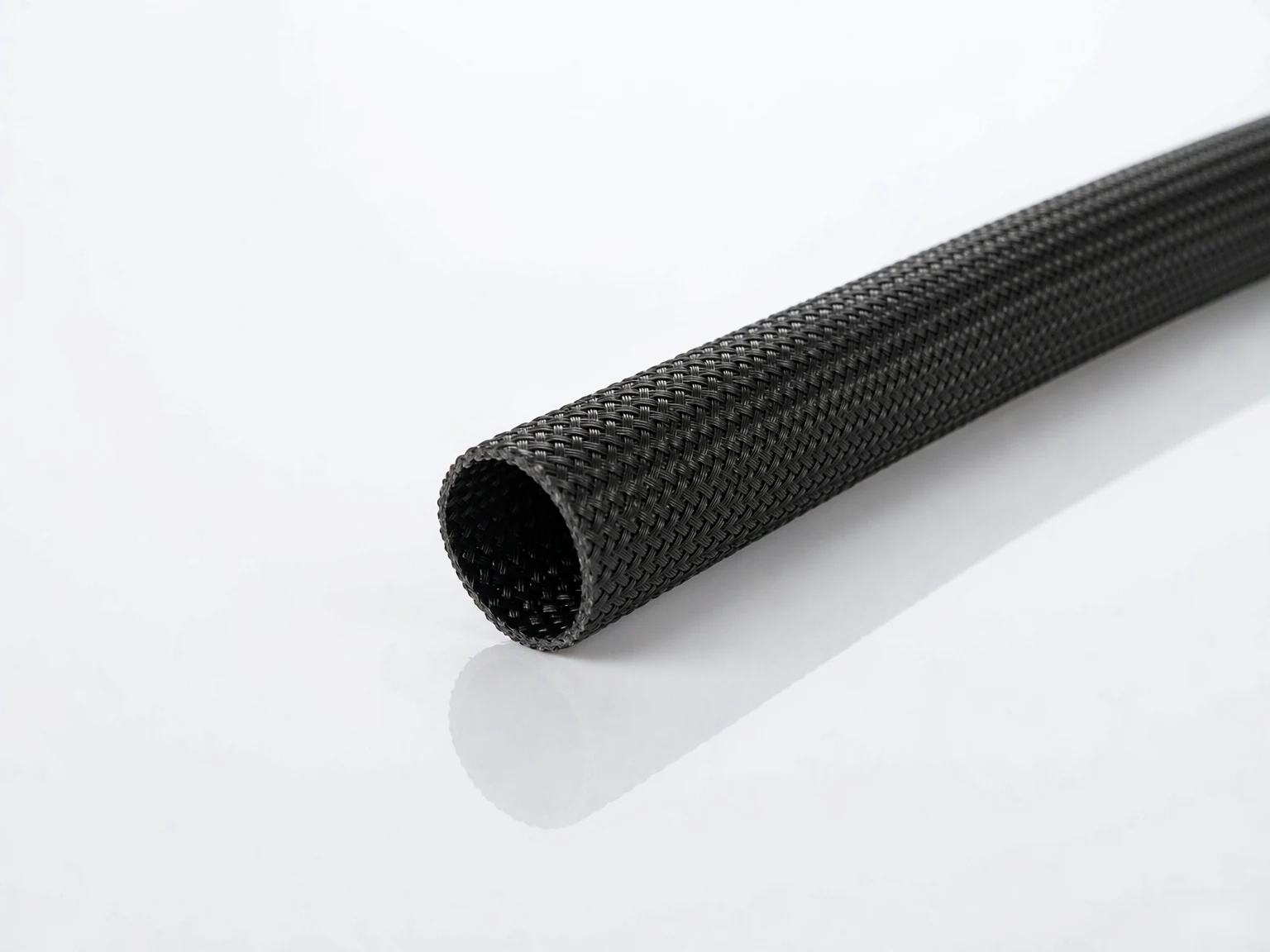
Black high-temperature abrasion-resistant sleeve
Abrasion plus temperature resistance with a uniform appearance; black, for engine-bay harnesses, equipment internals and exposed positions that should not draw attention.
ABRASION & IDENTIFICATION
Two functional families of braided sleeving. The abrasion group upgrades the outer layer for continuous rubbing; the identification group uses two-colour braiding for circuit identification or visual differentiation, replacing labels that peel off in oil, heat and vibration. Both come from the same braiding process — heavier or twisted yarn for abrasion, different yarns for colour.
Four series
Abrasion plus temperature resistance with a uniform appearance; black, for engine-bay harnesses, equipment internals and exposed positions that should not draw attention.
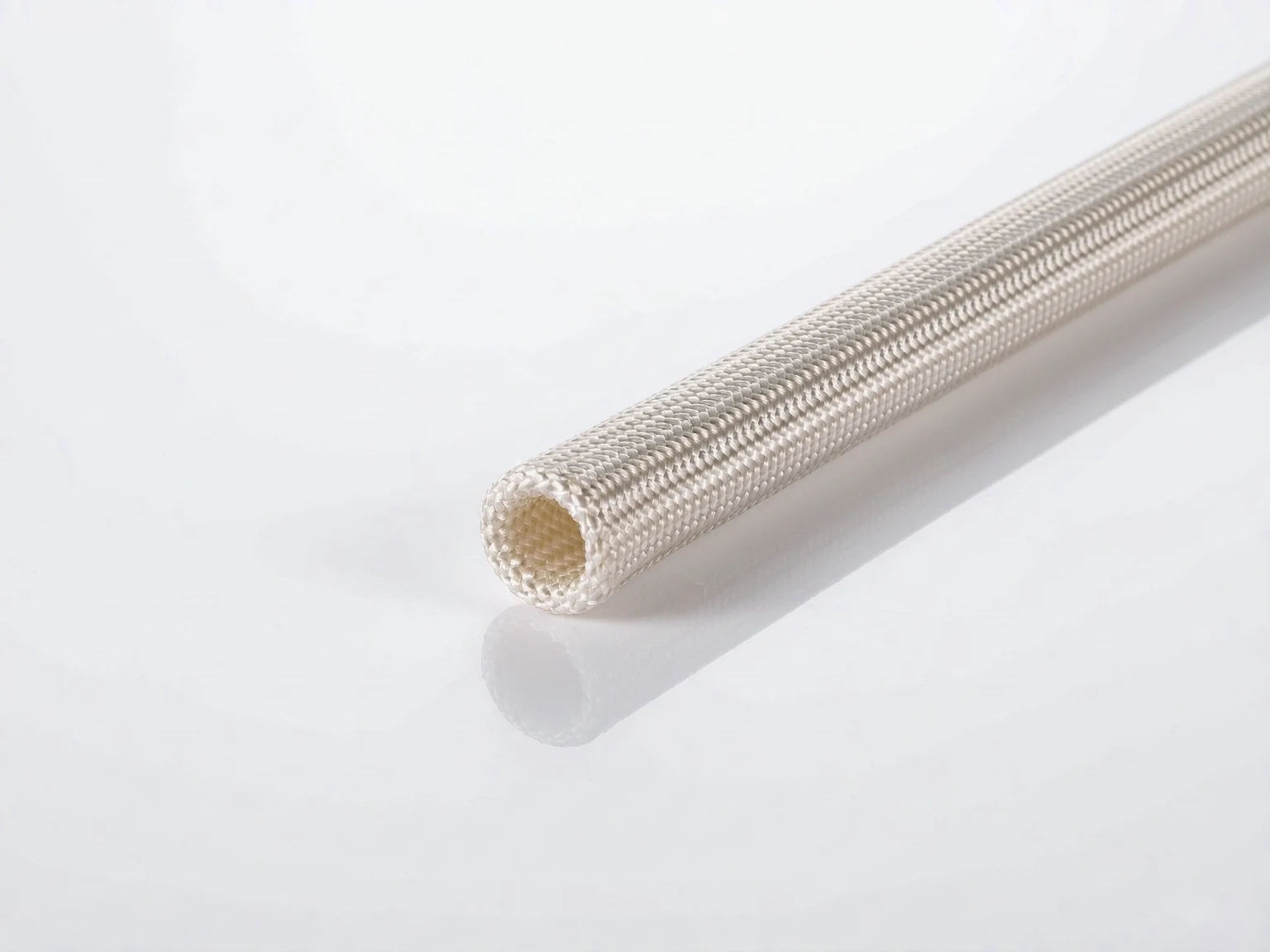
Abrasion plus a higher temperature ceiling; natural or black by construction, for sections near heat sources that also rub. This and the black series are two distinct products, not two names for one.
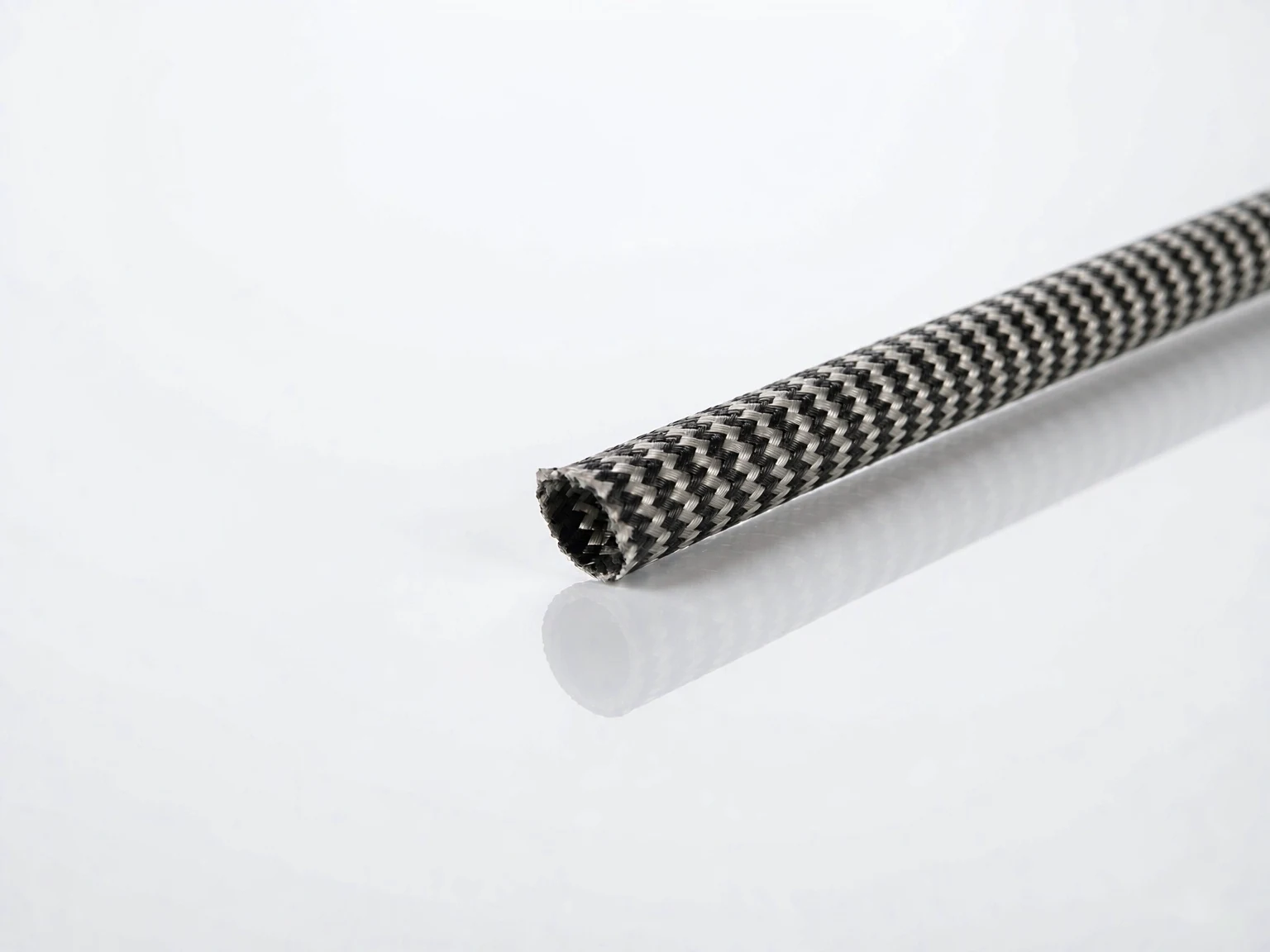
Circuit identification: continuous longitudinal two-colour stripes so one circuit can be traced along the run; black and white as standard, combinable.
Visual differentiation or brand recognition: interwoven pattern, black/white as standard, other colours to order; carries no circuit numbering logic.
Selection
Abrasion group: fix the working temperature and rubbing severity first, then the appearance colour. Identification group: traceability of individual circuits calls for identification braid; section-level visual differentiation or branding calls for patterned braid. Many projects use patterned braid for the run plus markers at key points.
Positioning
The four names are easily confused; the table separates them by purpose and appearance.
| Series | Purpose | Appearance | Typical position |
|---|---|---|---|
| Black abrasion-resistant | Abrasion + temperature, uniform appearance | Black | Engine bay, equipment internals, exposed but unobtrusive |
| High-temperature abrasion-resistant | Abrasion + higher temperature ceiling | Natural or black, by construction | Near heat sources with rubbing |
| Identification braid | Circuit identification | Continuous longitudinal two-colour; black/white standard | Multi-circuit harnesses needing traceability |
| Patterned braid | Visual differentiation / branding | Interwoven pattern; black/white standard, colours to order | Visible areas, machine-level appearance |
Colour range: black and white are standard (stable stock, short lead time); other colours are customised, subject to yarn availability and MOQ. Non-standard weave patterns can also be customised.
Uncoated braid has lower dielectric strength than coated fibreglass sleeving — do not substitute it where voltage withstand is specified.
Construction
Abrasion group: braided fibreglass with increased braid density, twist or coating to raise abrasion resistance. Thinner and more flexible than coated fibreglass sleeving — it trades some dielectric strength for conformity and cost.
Identification group: two-colour interwoven or single-colour construction. Identification braid integrates the marking into the sleeve so it cannot peel off in oil, heat or vibration; patterned braid solves appearance — differentiating harness groups on one machine more durably than labels.
Selection pitfalls
Uncoated braid has no coating layer and lower dielectric strength. Specify coated sleeving where voltage withstand is required.
Some dyed yarns fade under UV. Confirm colour fastness for outdoor visible positions, or use light-fast yarn sets.
Colour variation is more visible in multi-colour braid than single colour. Keep a first-article reference when ordering across batches.
Sharp cut ends damage wire insulation and are uncomfortable to handle; the rework cost exceeds the liner.
Identification is continuous longitudinal striping that traces a circuit end to end; patterned braid repeats a motif and carries no numbering logic. Using pattern for identification leaves the line unable to match circuits.
FAQ
Identification has continuous longitudinal two-colour striping so a circuit can be traced along the sleeve; patterned braid is an interwoven motif for section-level differentiation or branding. Both are black/white as standard, other colours to order.
Yes. Standard is a black/white interweave; other patterns can be customised subject to yarn availability, MOQ and sampling lead time — raise it during project development rather than before mass production.
No, they are two distinct products. The black series is defined by appearance and used in engine bays and equipment internals; the high-temperature series is defined by temperature and abrasion grade and used closer to heat sources or under harsher rubbing.
Black and white as standard; other colours to order. Custom colours require confirmation of yarn availability and MOQ, and usually take longer than black or white.
RFQ
Say whether the problem is wear or identification, and the series follows:
Related products
Samples and selection
Include purpose (abrasion / circuit identification / appearance), bundle range, temperature, colour or pattern, liner requirement, cut length and expected volume.